
2020262026 October Newsletter
What Would You Do
With 15 IQ Points?
For Neurologics client, Jennifer Gordon, the answer was:
- Get sober
- Go to graduate school
- Write a book
- Change women’s lives
What would YOU do with 15 IQ points?


Lunch & Connections
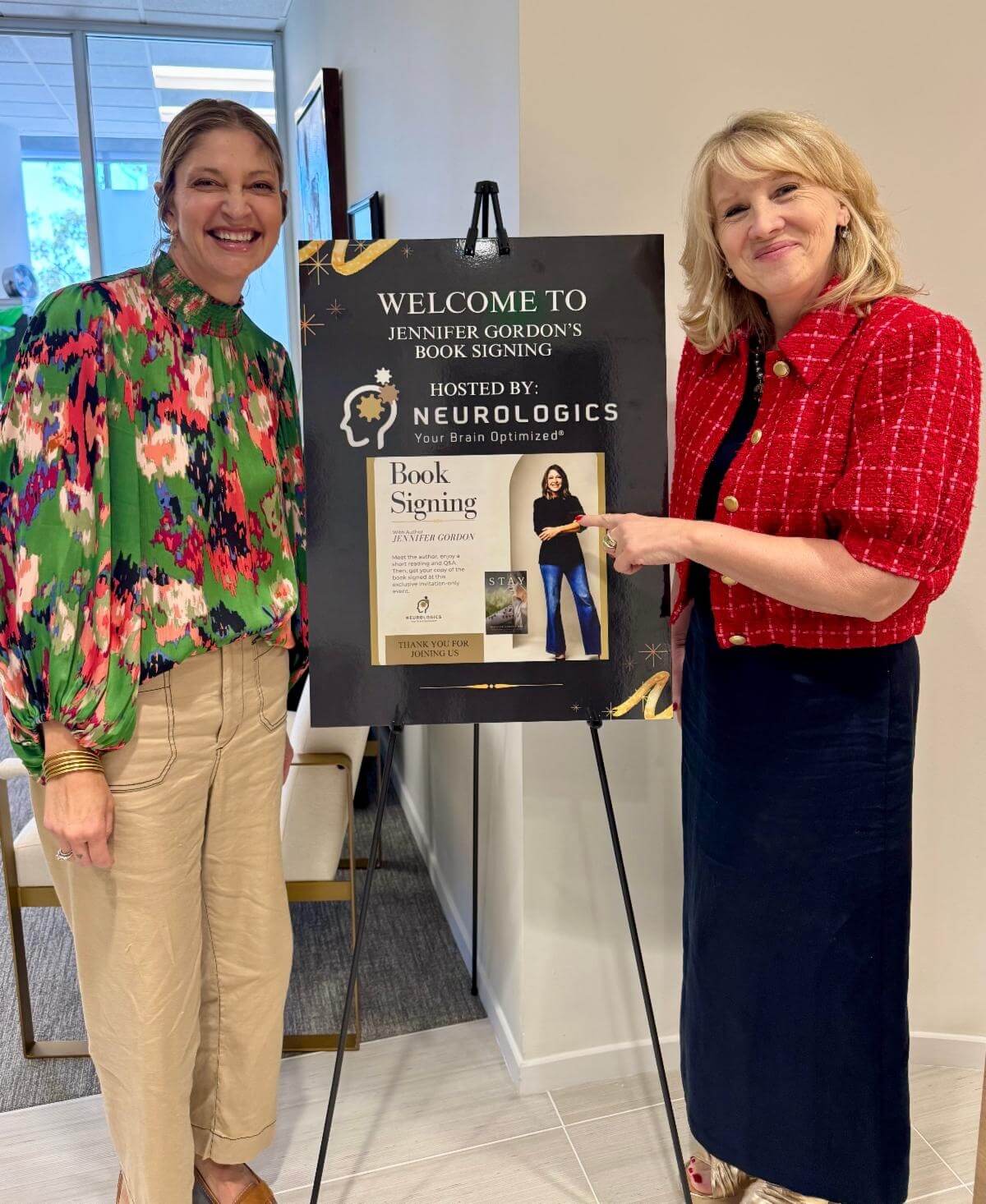
Book Signing Recap
Thank you to Jen and everyone that came to our book signing and networking event this month.
Jennifer Gordon, a Neurologics client in long-term recovery with an incredible story of growth, perseverance and success, spoke to the group and took time to sign copies of her new book, STAY.
Guests heard about Jen’s road to addiction, her recovery journey, and how Neurologics played a role in it. Not all addicts look the same. Jen was a successful, high performing mom of two with medically-prescribed medication that ultimately became an addiction.
Congratulations, Jen, on all of your success! Thank you for sharing your story!
Jennifer’s story is like that of so many others who have transformed their lives with Neurologics. It all starts with a brain map.



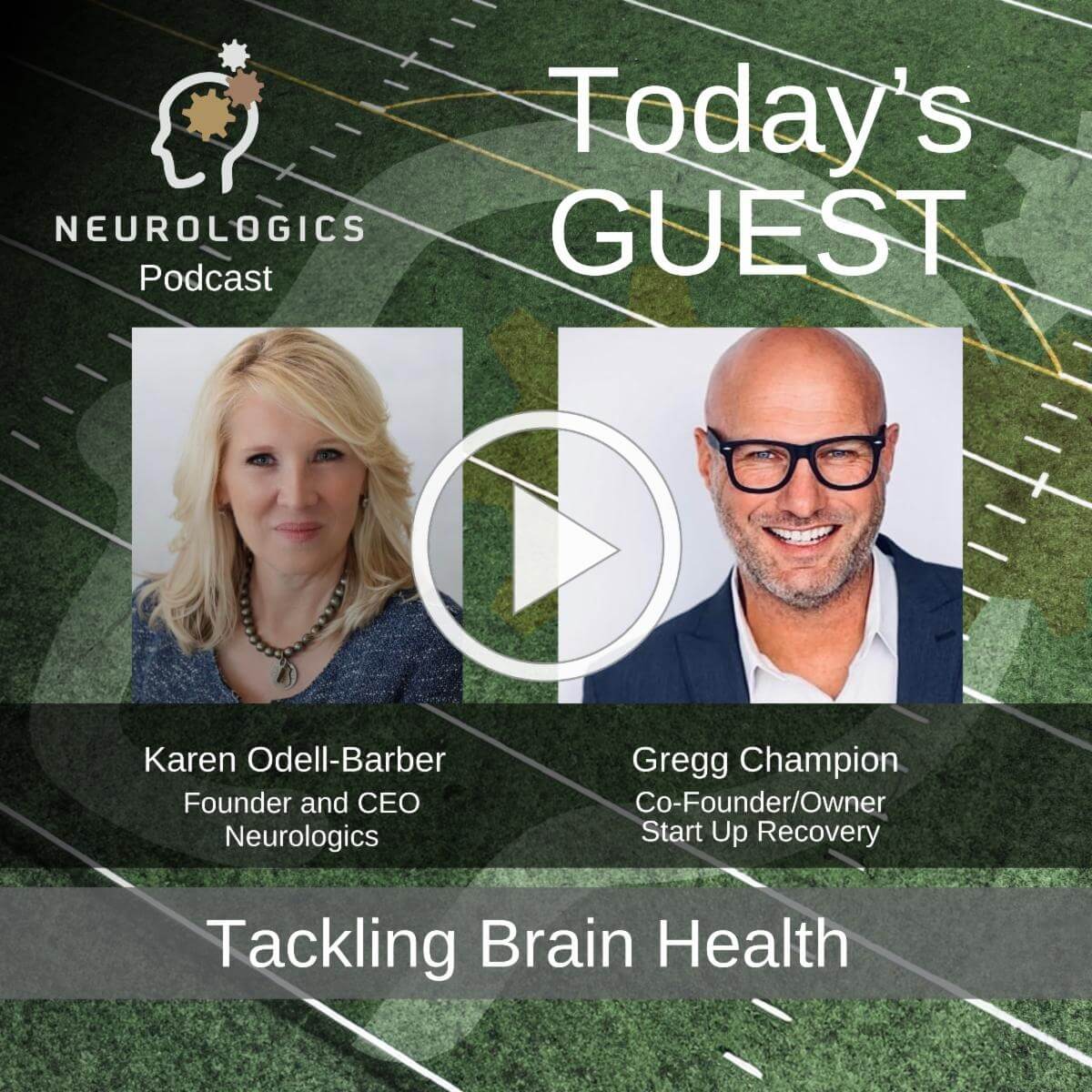
Our latest episode of Tackling Brain Health is live on YouTube. Click the link above to hear Karen and Gregg’s conversation regarding the complexities of addiction, the evolving landscape of substance use, the life-changing possibilities of recovery, and so much more.
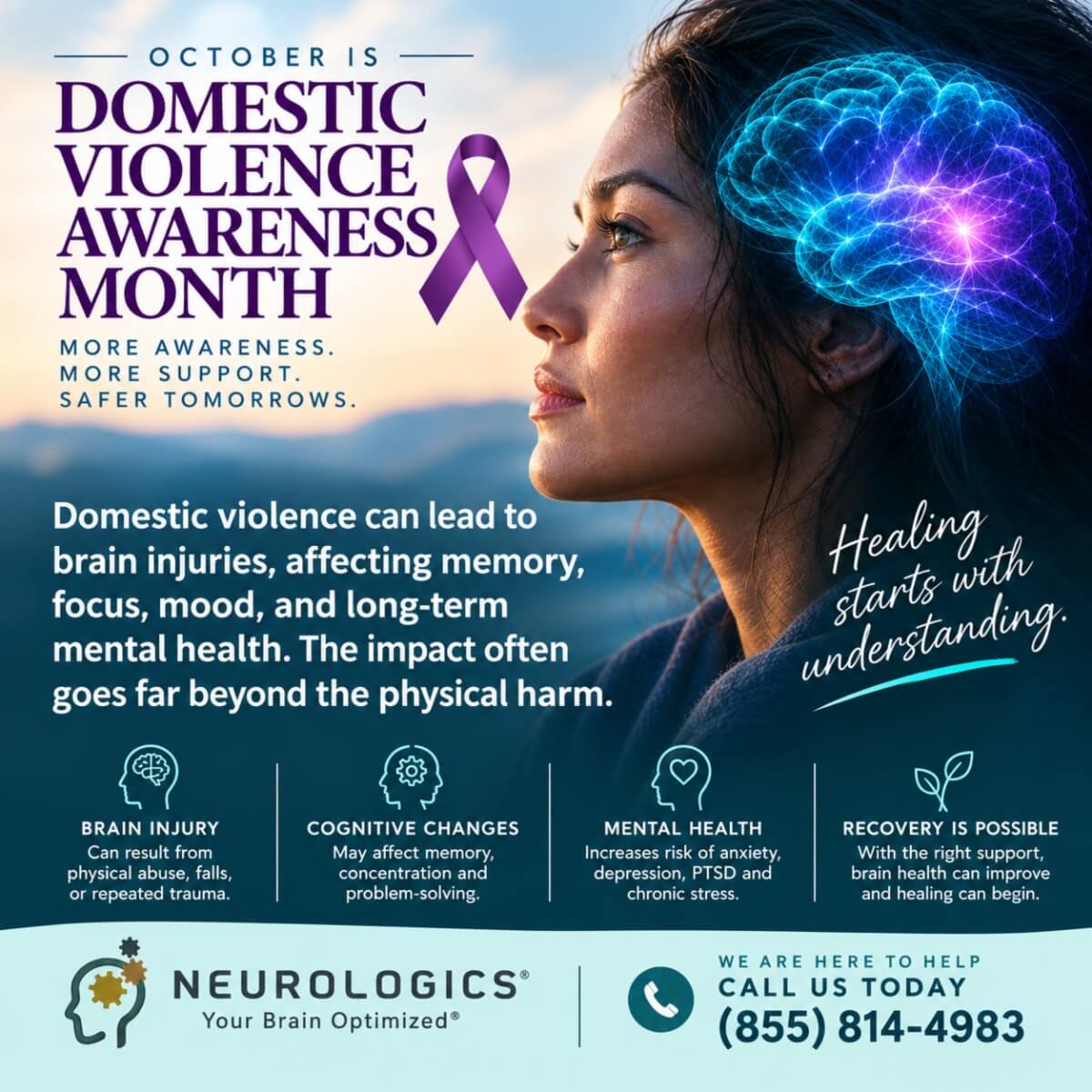
October is National Domestic Violence Awareness Month, a time to raise awareness, educate and remind those affected that they are not alone.
Domestic violence can have profound and lasting effects on the brain and overall health.
Physical violence, blows to the head, and falls can all result in traumatic brain injuries (TBI). Research has found that TBI is a significant and often under recognized consequence of domestic violence. In a 2024 U.S. study of nearly 3,900 people with domestic violence-related trauma, 31.1% had a traumatic brain injury.
But there is another important part of this conversation: the relationship between TBI and violence can go in both directions. Research has found a high prevalence of prior TBI among people who have committed domestic violence. TBI can be associated with changes in impulse control, behavior, mood, and cognition. However, TBI does not mean someone will become violent, and it should never be used to excuse abusive behavior.
For someone experiencing domestic violence, the effects of repeated trauma may extend far beyond visible injuries. Headaches, memory problems, difficulty concentrating, mood changes, anxiety, depression, and other neurological symptoms can persist—and some survivors may never receive appropriate evaluation for a brain injury. Our Neurologics Brain Map can tell you if you’ve had a brain injury and provide you with answers and solutions.
This Domestic Violence Awareness Month, we’re helping shine a light on the connection between domestic violence, traumatic brain injury, and brain health.
If you’re looking for answers to your brain health questions, call us today.

Denise Brown just released a book, For My Sister Nicole: Love Shouldn’t Hurt-What to Know About Domestic Violence. Denise’s book encourages readers to better understand the realities of domestic violence, recognize unhealthy and abusive relationships, and help create a culture where everyone feels safe, valued and supported.
If you or someone you know is experiencing domestic violence, you are not alone. The National Domestic Violence Hotline is available 24/7 at 1-800-799-SAFE (7233) or by texting START to 88788.
DOMESTIC VIOLENCE
DID YOU KNOW?
- Ongoing emotional or physical abuse can interfere with attention, memory, decision-making, and the ability to process information.
- Chronic exposure to domestic violence can make the brain more sensitive to potential threats, keeping the nervous system in a prolonged state of stress.

Exploring The Future Of Brain Health:
Neurologics’ non-invasive Brain Mapping is the most technologically-advanced, comprehensive brain assessment in the world. Quantitative Electroencephalogram combines traditional EEG with proprietary software that creates a precise assessment with unmatched accuracy.
To learn more about Neurologics and how our groundbreaking technology can benefit you, your clients, or a loved one, visit our website Neurologics.com or call Our VP of Admissions & Logistics, Michelle, at (855) 814-4983 with any questions.
We look forward to continuing this incredible journey with all of you and advancing the field of brain health.
